



ZMM Around Town: When Contracts Go Wrong
ZMM Around Town: When Contracts Go Wrong
Construction disputes are not accidents. They are built into projects long before anyone files a claim — in the instructions that were never confirmed in writing, the notices that were never sent, the certificates that were issued too late or not at all. On 14 May 2026, ZMM’s Senior Partner Andrew Heng and Founding Partner Datuk Megat took that argument to Putrajaya, delivering a full-day programme on the three pressure points that define virtually every construction dispute: delay, payment, and variations.
The audience — drawn from PJH and KLCC’s project and legal teams — engaged with both sessions hard. These are not organisations that receive legal presentations politely and move on. They pushed back, asked the difficult questions, and left with answers they could use.
Here is what the day covered.
The Three Pillars (And Why They Never Stay Separate)
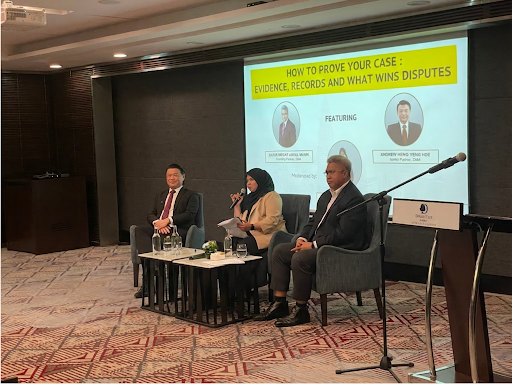
Andrew opened the morning by putting the dispute landscape in terms that any project team can recognise. Employers want on time, on budget, on scope. Contractors want more time, more money, or more scope. That tension is structural — and when it breaks down, it almost always breaks down across the same three fault lines.
Delay triggers Extension of Time claims and, if EOT is refused or mismanaged, LAD exposure. Payment disputes arise when certification is slow, amounts are contested, or retention is withheld. Variations affect both — additional scope creates time pressure and payment entitlement simultaneously.
The three do not stay in their lanes. An employer who refuses to grant justified EOT does not save the LAD. They lose it. That was the first substantive point of the morning, and it is the one most often missed at the project level: the Extension of Time clause exists to protect the employer’s right to liquidated damages, not to give anything away.
EOT Is Not a Concession. It Is a Condition.
The logic runs like this. Parties agree on a completion date because both carry obligations — the employer to give the site, the contractor to build on it. When the employer’s conduct causes delay, time is no longer running exclusively against the contractor. If the employer then refuses to adjust the completion date, the LAD mechanism breaks. Courts will not allow an employer to profit from their own breach by insisting on a deadline they themselves prevented the contractor from meeting.
Without an operative EOT mechanism, time goes “at large.” The contractor’s obligation shifts to completion within a “reasonable time” — a standard no delay expert, adjudicator, or judge can define with precision. The contractual LAD falls away with it.
A recent Court of Appeal decision went further. In Era Kemuncak Jaya, the court indicated that EOT rights may even be implied into a contract where none is expressly provided, applying the officious bystander and business efficacy tests. The practical implication is not that you can safely omit an EOT clause. It is that the courts are reluctant to leave employers in a position where they can exploit procedural gaps to escape legitimate delay claims.
Audience members pressed hard on the CNC question: can an employer issue a Certificate of Non-Completion while EOT applications are still under assessment? Andrew’s answer was direct. Issue the CNC to preserve your position. If the EOT assessment comes back in the contractor’s favour, revoke it. A CNC that is later reversed does less damage than a LAD entitlement that lapses because the employer delayed issuing it.
Notice Is Not Bureaucracy. It Is Entitlement.
The KL Eco City case established the point the construction industry still resists: giving written notice of a delay event within the prescribed 28 days under the PAM Conditions is a mandatory condition precedent to any EOT claim. Not a procedural formality. A condition.
Contractors who fail to serve notice on time do not merely complicate their EOT claim. They lose it. The Yuk Tung case reinforced the corollary: a contractor who fails to exercise the notice mechanism cannot then turn around and argue that time has gone at large. You cannot benefit from your own procedural breach.
This matters equally on the employer side. The obligation to issue CNCs and EOT assessments within the contractual timeframes is not administrative housekeeping — it is the mechanism that keeps LAD alive.
Payment: The Cash Flow Reality
Contractors fund projects on credit. Labour, materials, and equipment costs run continuously. The payment cycle is the only mechanism that makes long-duration projects financially viable.
When certification is delayed, amounts are shaved without explanation, or payment is withheld without proper contractual authority, the cash flow breaks — and disputes follow. Andrew traced the full arc: from payment applications and interim certificates (which are estimates, not final determinations) through to CIPAA adjudication, suspension of works, and direct payment from principals.
Two points stood out.
First, on quantum meruit: Section 71 of the Contracts Act imposes an obligation to pay where a person lawfully does work for another’s benefit without intending to do it gratuitously. The 2018 Mega Mayang case demonstrated how far courts will go to apply this. Where an employer had effectively supervised and directed a subcontractor directly — bypassing the main contractor entirely — the court found that privity of contract was not the whole story. The employer had assumed the benefit; the employer had the obligation to pay.
The audience immediately tested the limits of that principle. Does normal site supervision by the employer’s team create the same exposure? The answer is no. Mega Mayang turned on the degree to which the employer stepped into the main contractor’s management role. Attending progress meetings does not do that. Issuing instructions directly to subcontractors and bypassing the main contractor’s authority does.
Second, on CIPAA: Section 35 renders conditional payment provisions void. “Pay when paid” and “pay if paid” clauses do not survive the Act. The SPM Energy decision confirmed this applies in court and arbitral proceedings even where no adjudication has been commenced. Clause 43 of the Conventional COC — which allows employers to request proof of payment to subcontractors, withhold if proof is absent, and pay subcontractors directly — sits differently. Its purpose aligns with CIPAA’s objective of protecting cash flow down the chain. Andrew’s position: it is not caught.
Under Section 30, a subcontractor with a favourable adjudication decision and an unpaying main contractor can request direct payment from the employer’s principal. The employer cannot simply ignore that request. Where money is due or payable to the main contractor at the time the request is received, the obligation to pay the subcontractor directly kicks in.
Variations: The Scope You Didn’t Contract For
A variation clause exists so that neither party has to renegotiate the contract every time the design develops, site conditions require adjustment, or the employer changes their mind. Without it, every change would require a new agreement. With it, the employer can instruct variations in writing and the contract provides the mechanism for valuing and compensating them.
Under the Conventional COC, a supplementary agreement is not required for a valid variation instruction. Clause 46 is sufficient — provided the instruction is in writing.
Disputes arise when employers contest whether additional work is a variation at all (asserting it falls within the original scope), when contractors dispute the valuation, or when certification of the varied work is delayed. These are exactly the disputes that end up in CIPAA proceedings — adjudicators have the power under Section 25(m) to review and revise any certificate issued under the contract.
One boundary the courts have drawn clearly: a variation clause cannot be used to omit the whole of the contracted works. A variation clause adjusts scope. It is not a termination for convenience clause in disguise. In Pembinaan Perwira Harta, an employer who attempted to use the variation clause to strip the contractor of its entire scope — effectively giving the works to someone else at a lower price — found the court unwilling to permit it. Variation and termination for convenience are distinct mechanisms. Neither can be exercised unreasonably or in bad faith.
The Afternoon: What Wins and What Loses
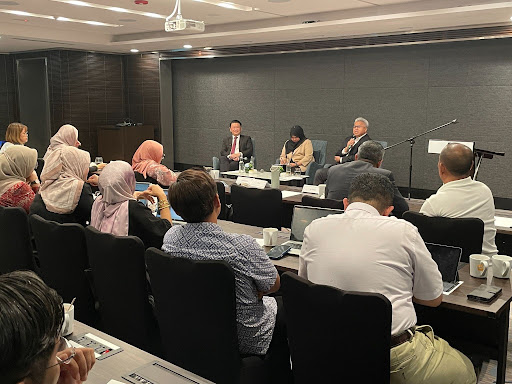
The evening session took a different form — a coffee table discussion with Datuk Megat anchoring the practical side.
The opening question: what wins or loses a case before legal argument even begins?
Datuk Megat’s answer required no elaboration. Documentation, documentation, documentation.
Not documentation assembled after the dispute crystallises. Not reconstruction from memory. Contemporaneous documentation — records written at the time the event occurred, letters sent when the instruction was given or contested, minutes that accurately reflect what was decided. The weight courts and adjudicators give to a document is directly proportional to its proximity to the event. A site instruction recorded in a letter sent the same day is difficult to dislodge. An internal note prepared twelve months later, after litigation has commenced, is not.
PJH’s track record under pressure was instructive. In three separate CIPAA proceedings brought by the same contractor, all three resulted in zero award against PJH. The documentation was in order. When the adjudicator was faced with a conflict between what the contractor alleged and what the contemporaneous records showed, the records prevailed.
Andrew added the practical corollary on unreplied correspondence. If a contractor sends a letter asserting a claim and the employer does not respond, that silence creates a problem. It does not create an admission — but it creates a gap in the narrative. In CIPAA proceedings with ten working days to file a response, a letter that was never replied to at the time, and which nobody on the employer’s team now remembers, is difficult to counter. The advice is straightforward: respond to letters as they arrive. If the contractor is cycling the same allegations repeatedly, write the full stop letter — “We have replied twenty-four times. This is our final response. Further non-reply is not an admission.”
On Witnesses, Settlements and Being Reasonable
The afternoon covered witness preparation with the same directness. Grade A witnesses have personal knowledge of the events. Grade B witnesses were involved but not central. Grade C witnesses are there to read documents. The case is won or lost on Grade A evidence — and Grade A witnesses need to know that the witness stand is adversarial, not conversational.
The best witness is an honest one. Someone who concedes what must be conceded, holds firm where the evidence supports them, and does not try too hard to defend the indefensible. The witness who overreaches under cross-examination does more damage to their own case than the opposing counsel could have managed alone.
On settlement, Datuk Megat was characteristically candid: if you can settle, settle. Not from weakness — from pragmatism. A single judge holds your fate. The variables in any trial are numerous and not all of them are within your lawyer’s control. Settle from a position of strength, with proceedings running and proper leverage established. But settle.
The session closed on force majeure and the current question of geopolitical disruption to supply chains. The answer was measured: force majeure is a case-by-case argument, not a sweeping declaration. The industry’s path through it is the same path it took through COVID — reasonable parties finding workable solutions, with lawyers in the room early enough to make sure the workable solutions are also legally sound.
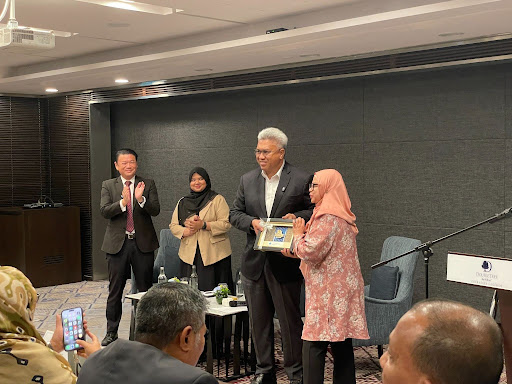
ZMM thanks PJH and KLCC for the invitation and for an audience that made the day worth having.
For queries on construction disputes, CIPAA, or contract advisory, contact andrew@zainmegatmurad.com or visit zainmegatmurad.com.
This site uses Akismet to reduce spam. Learn how your comment data is processed.
Leave a Reply
You must be logged in to post a comment.